
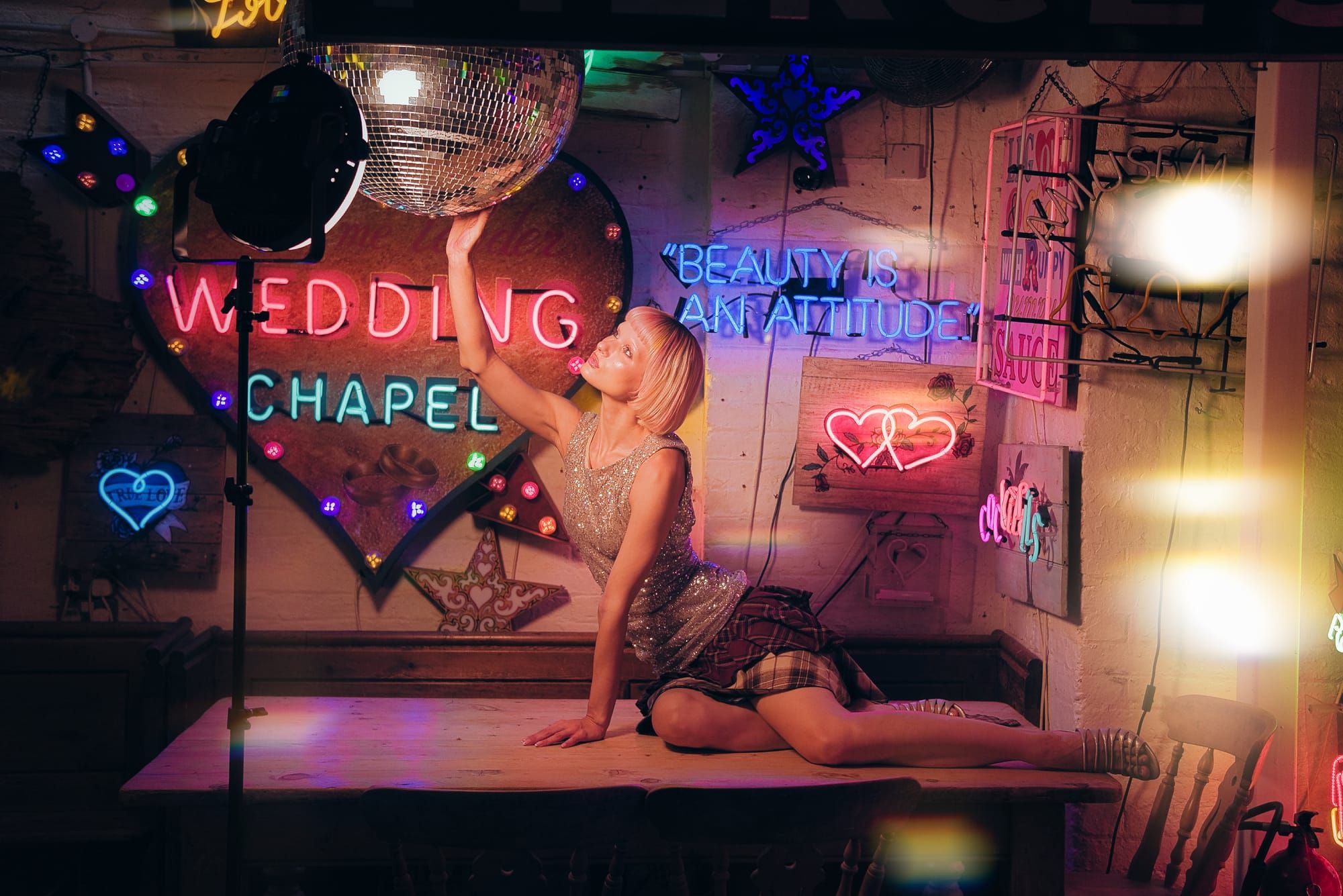

There are some locations where the photographer has to work hard to find a picture. God’s Own Junkyard is not one of them.
If anything, the problem is the opposite.
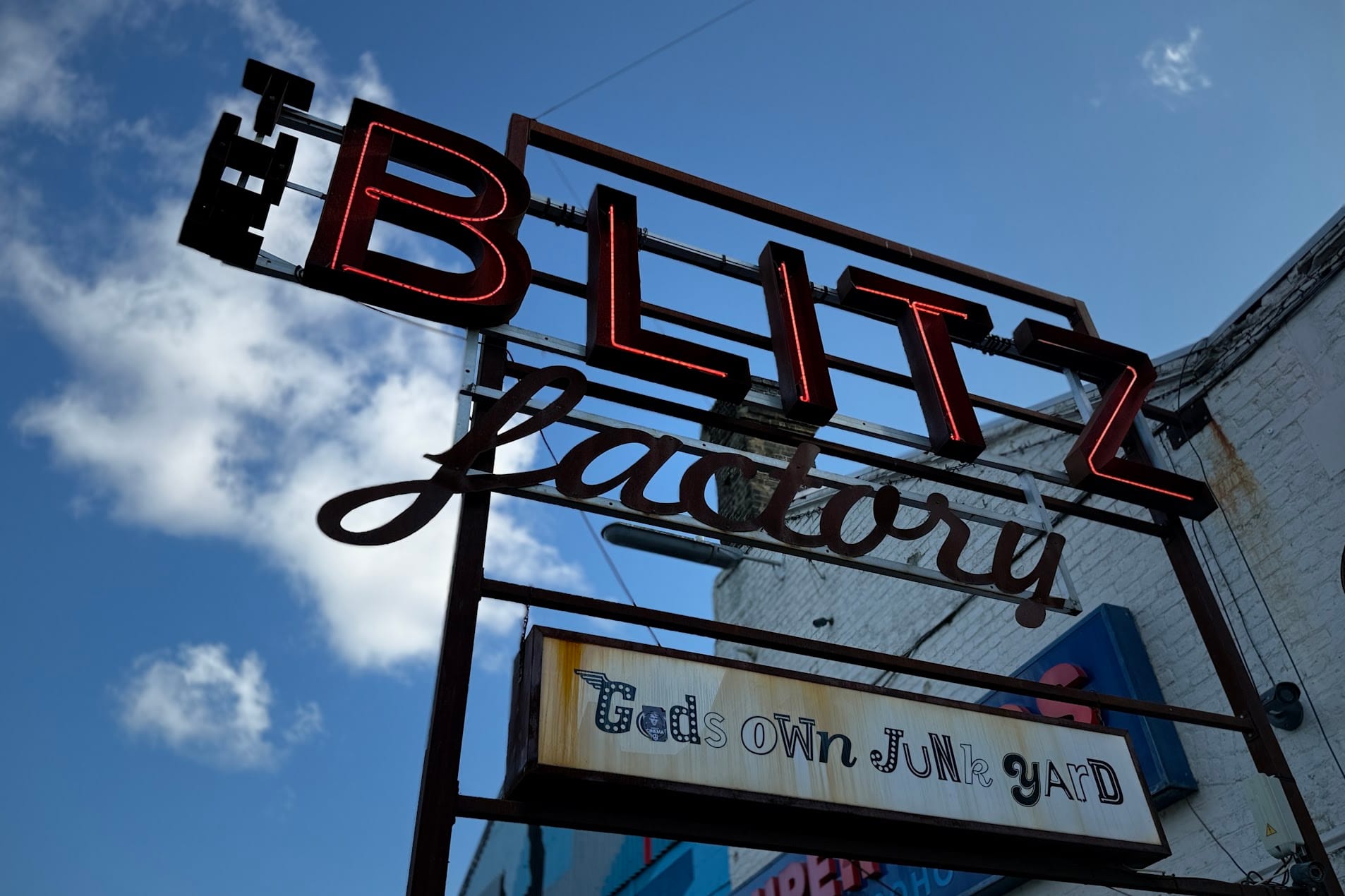
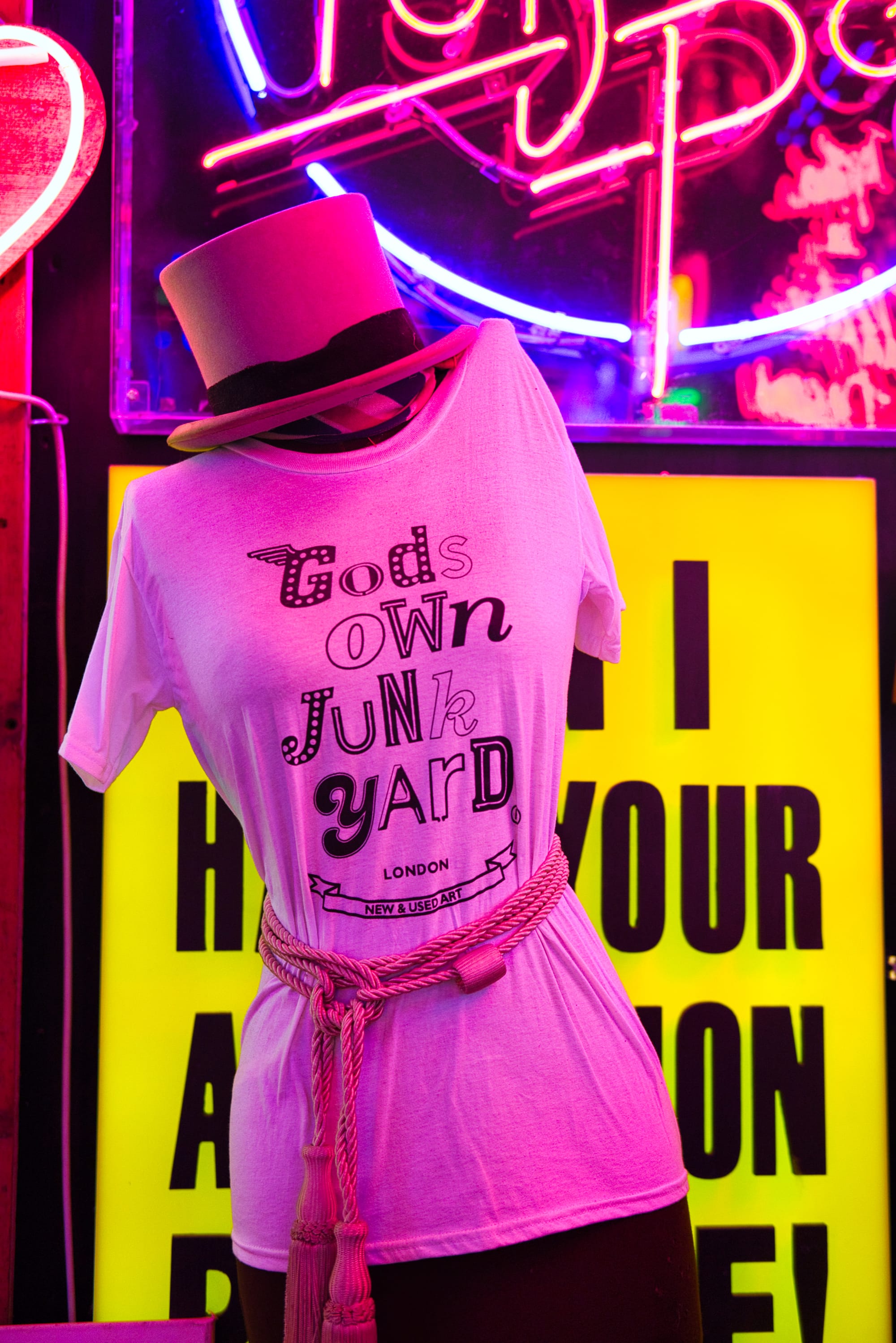
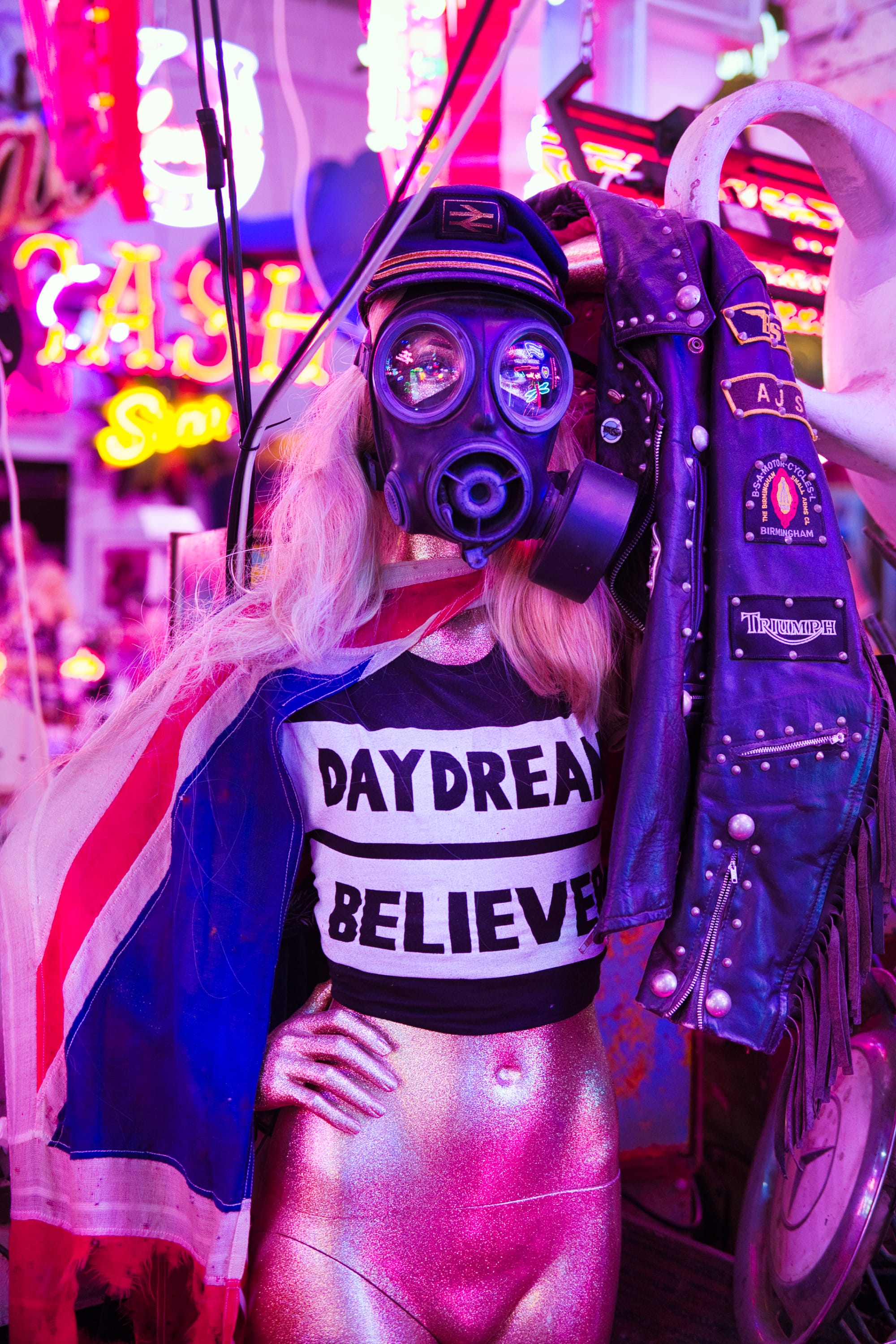
Walk into this extraordinary collection of neon signs in Walthamstow, and almost everything is demanding your attention. Words, colours, reflections, old advertising signs and hundreds of individual light sources compete for space. It is wonderfully chaotic.
And that makes it a surprisingly challenging place to photograph people.
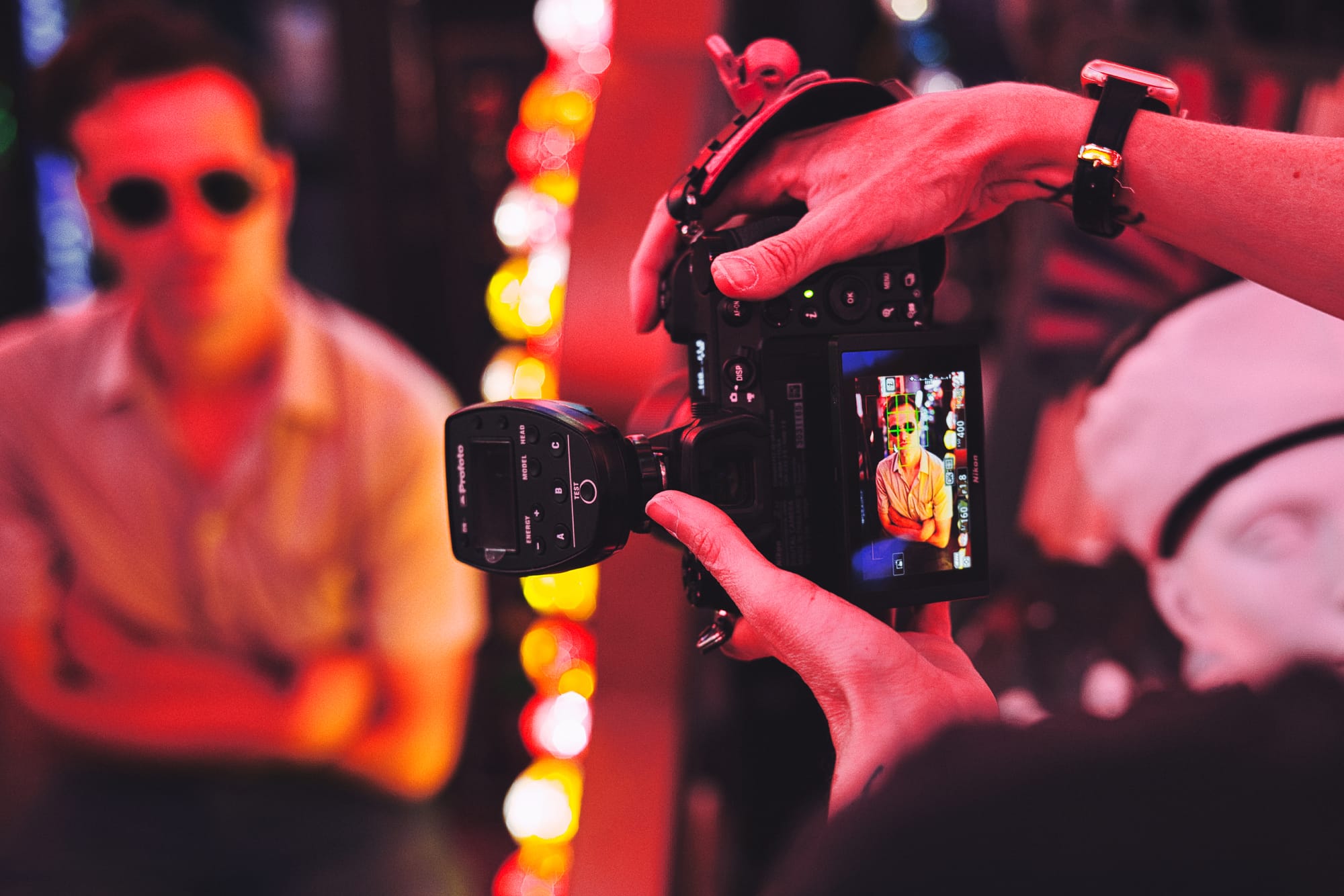
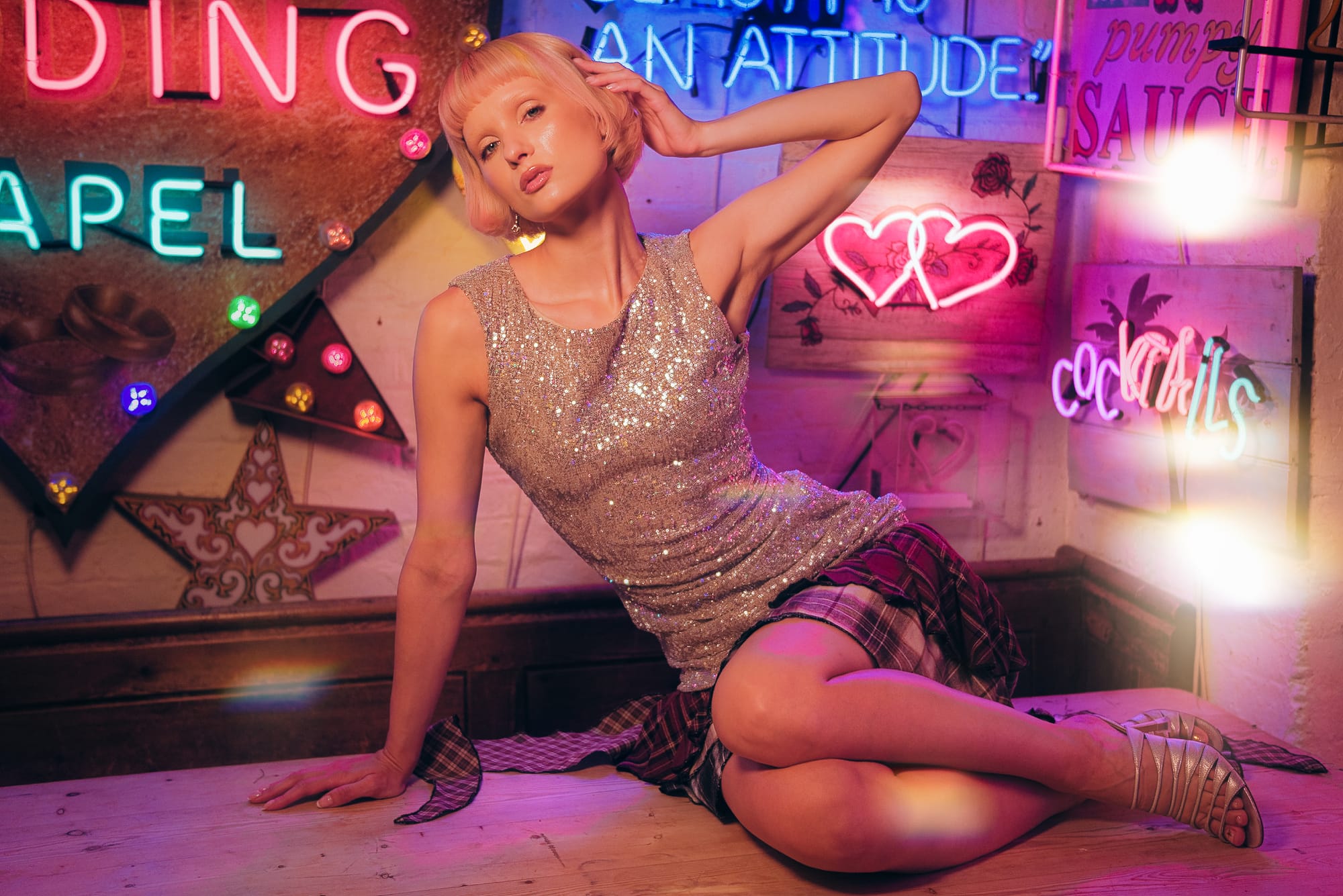
I spent a few hours there recently photographing three models, with the simple intention of seeing what I could make from the combination of people, neon and a location that has a personality every bit as strong as the subjects themselves.
When the background refuses to behave
Portrait photography often involves simplifying things. Find good light, choose a background that doesn’t distract, concentrate on the person. Here, almost none of those rules apply, the background is the distraction.
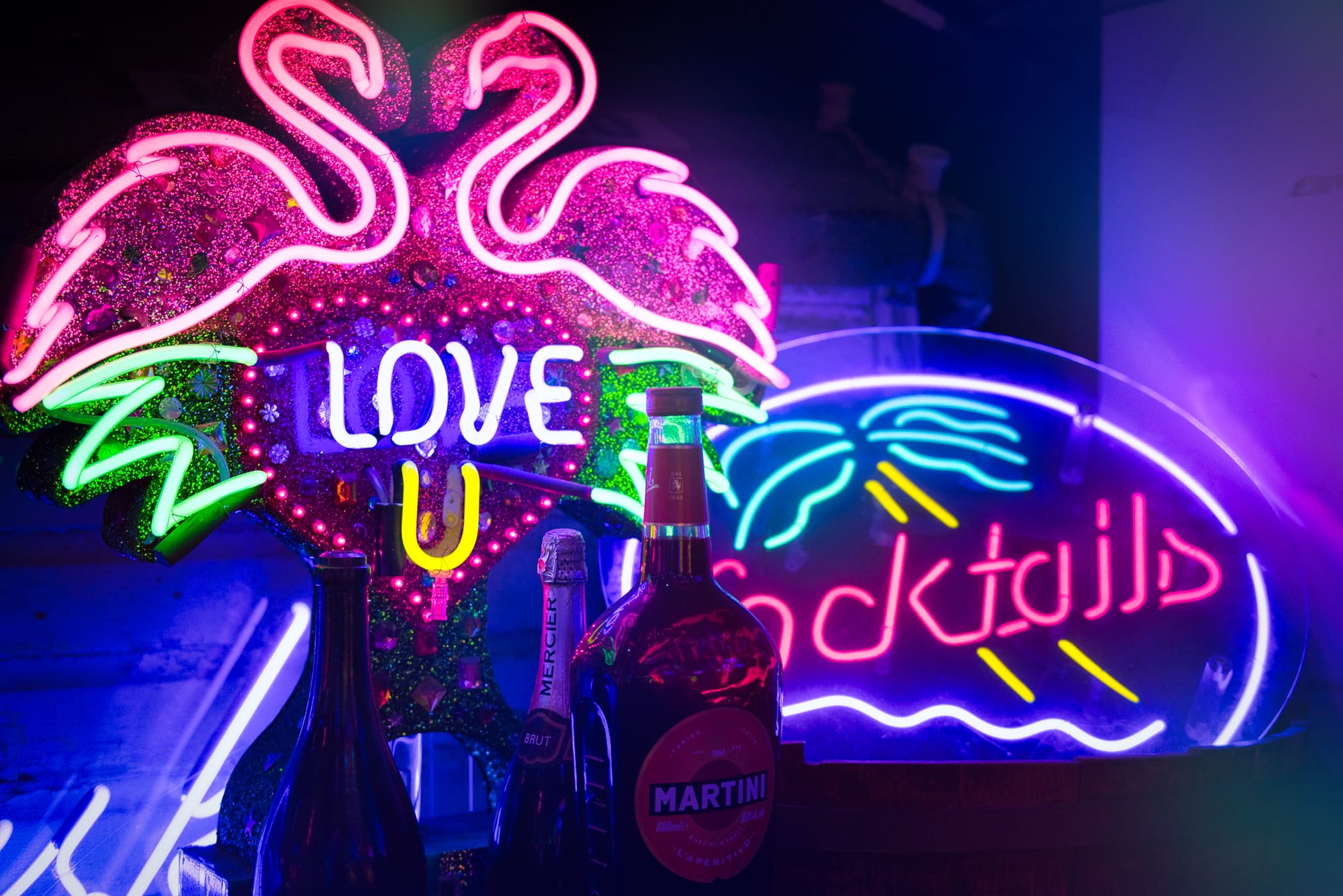
The neon signs throw pink, blue, green and orange light across faces and clothing. Exposure can change dramatically simply by moving a metre or two. Bright lettering can easily become more important than the person standing in front of it.
Trying to neutralise all that colour seemed rather pointless, so instead I decided to embrace it.
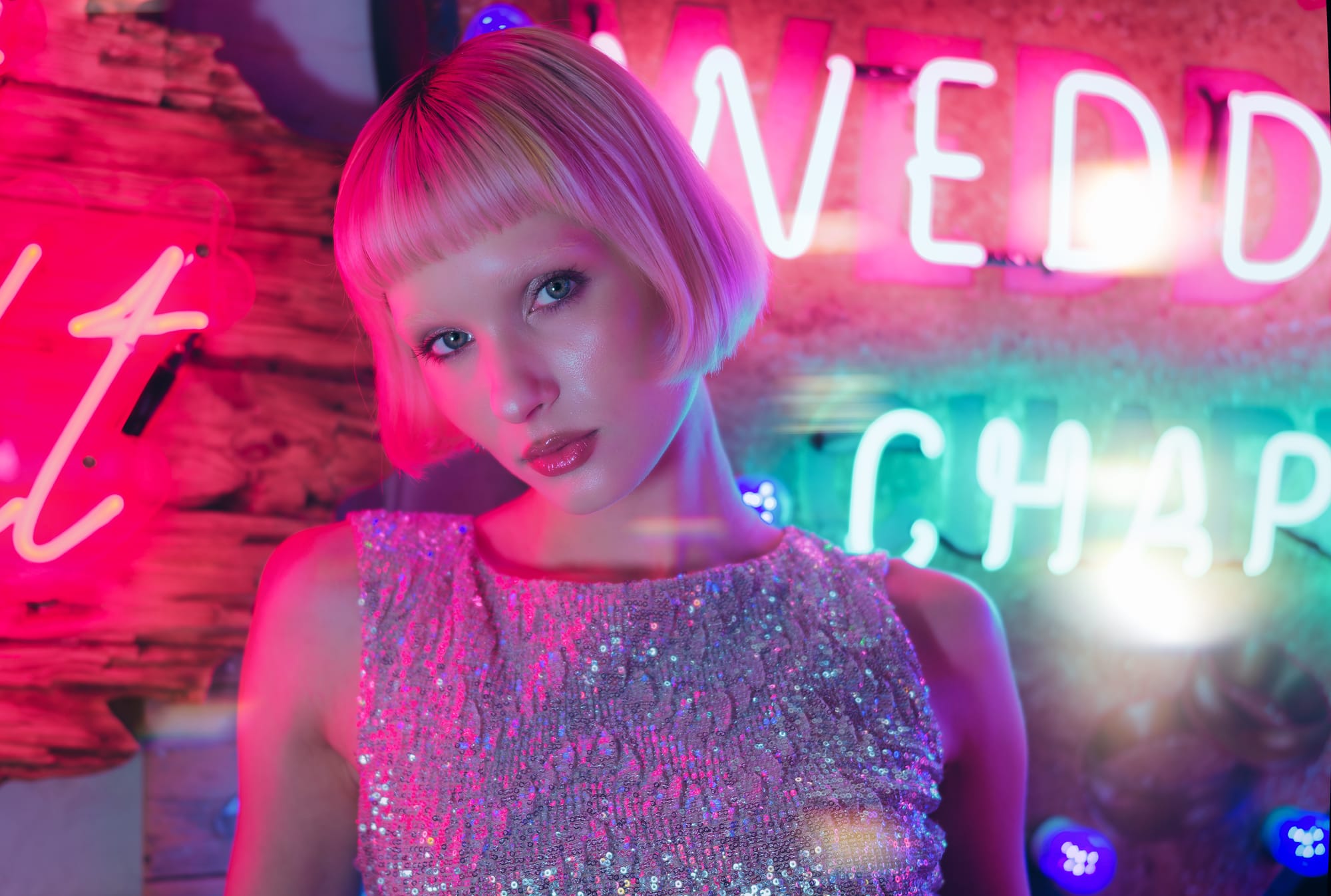
The silver sequinned dress worked particularly well. Rather than being illuminated by the signs, it picked up tiny fragments of colour from around the room. In some photographs the model almost becomes another piece of the neon installation.
That first close portrait is probably one of my favourites from the session. There is very little conventional about the colour, but the eyes still hold the photograph together.
Letting the location become part of the portrait
As the shoot developed, I became less interested in simply making portraits at God’s Own Junkyard and more interested in making photographs that could only really have been made there.
That meant including more of the surroundings.
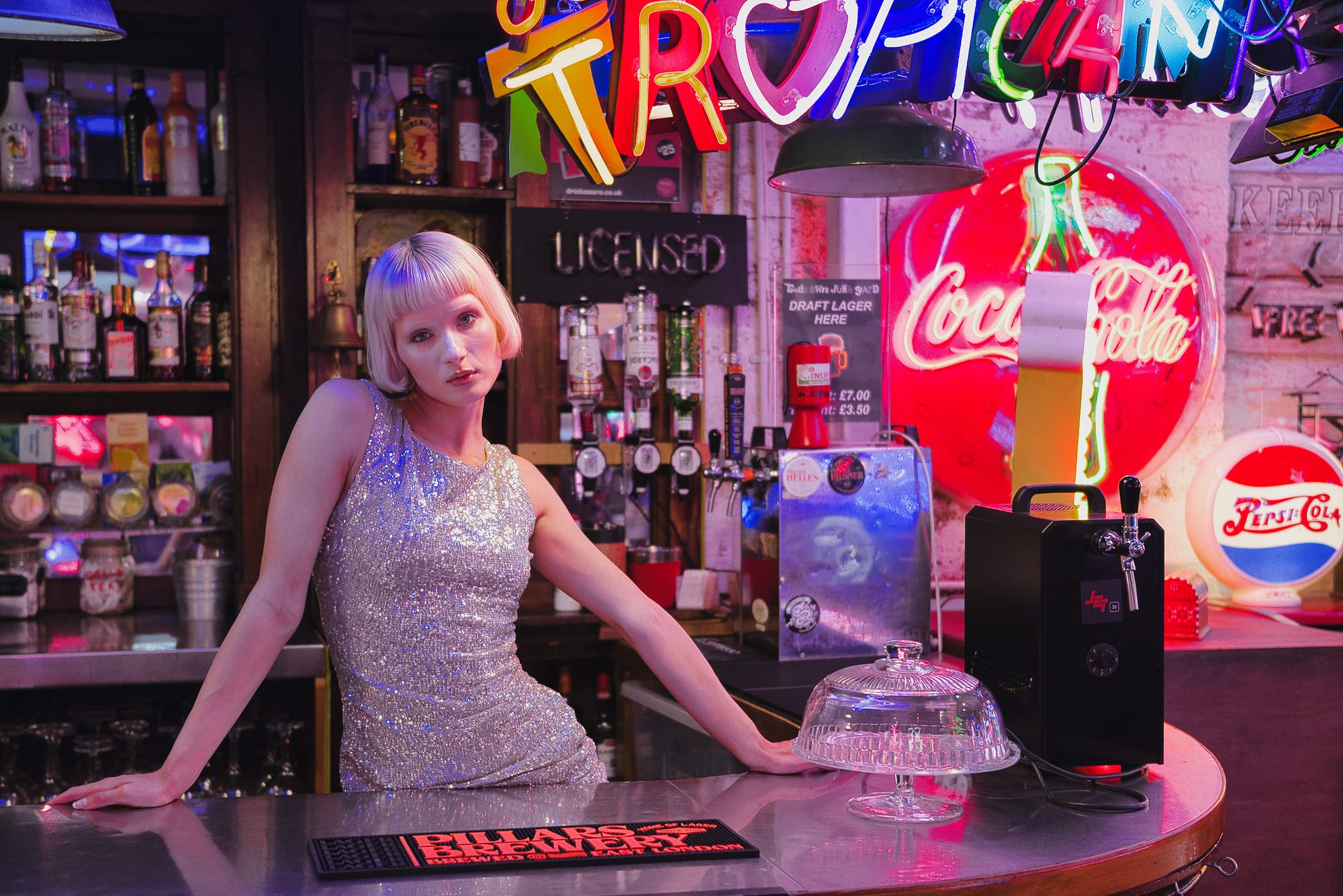
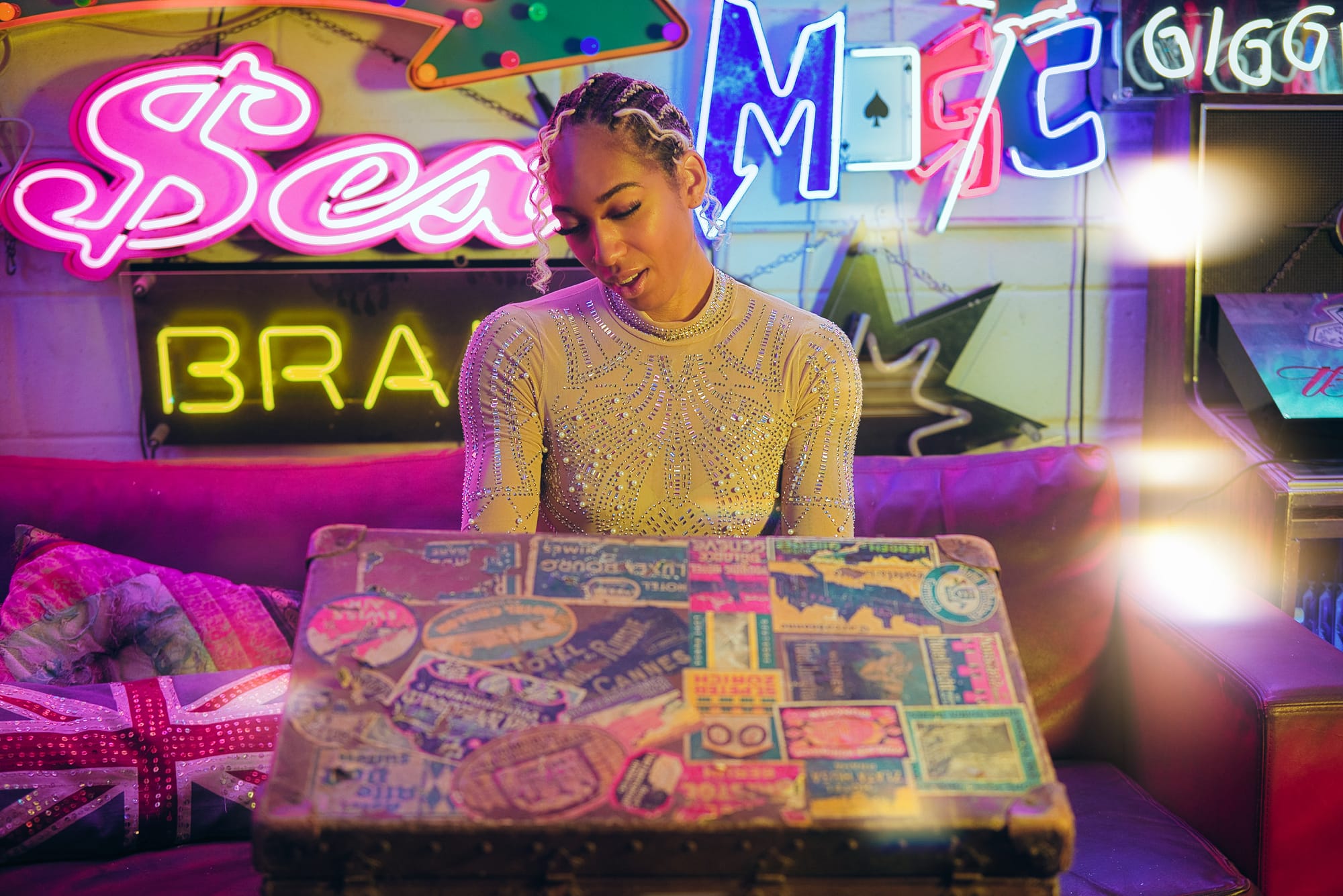
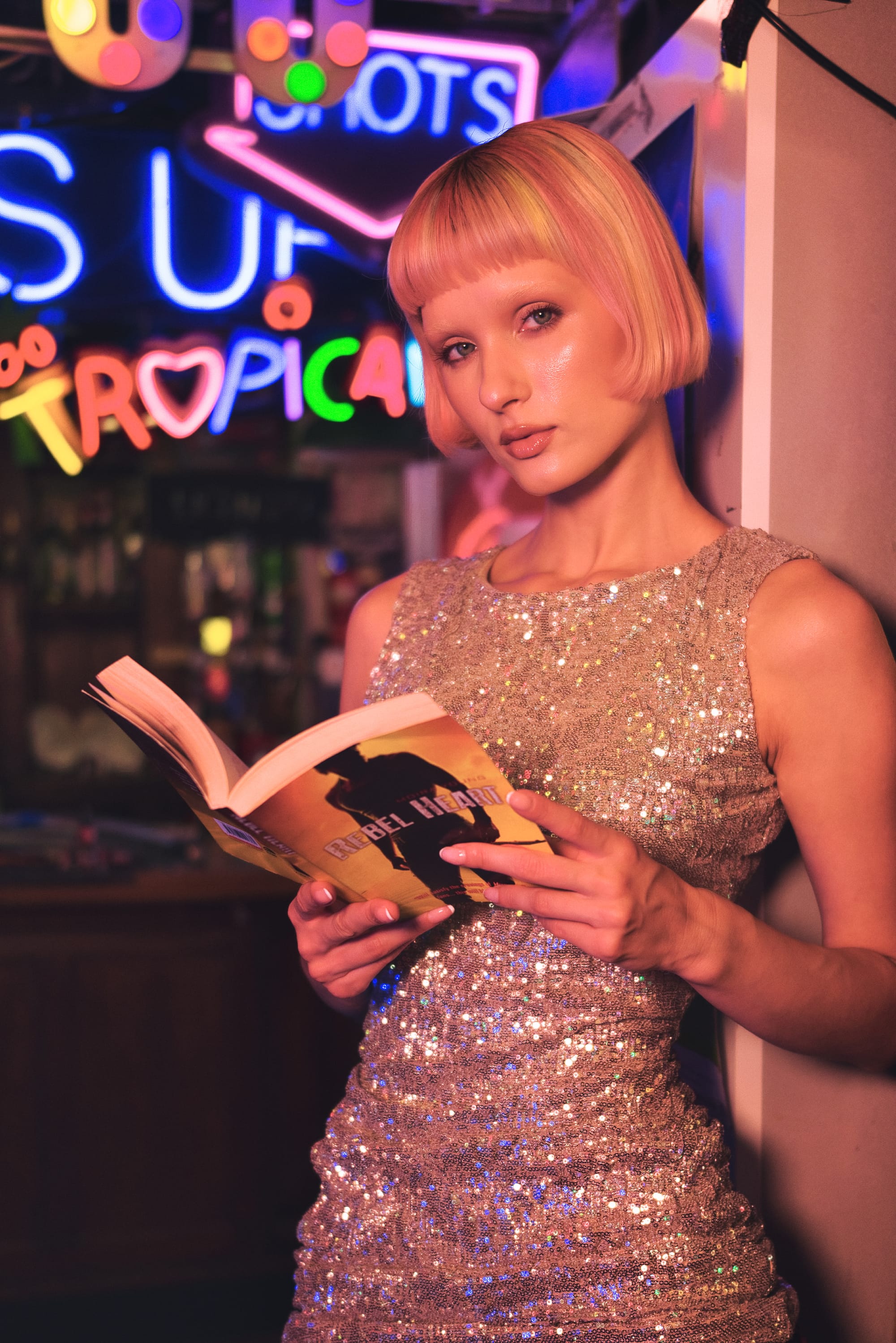
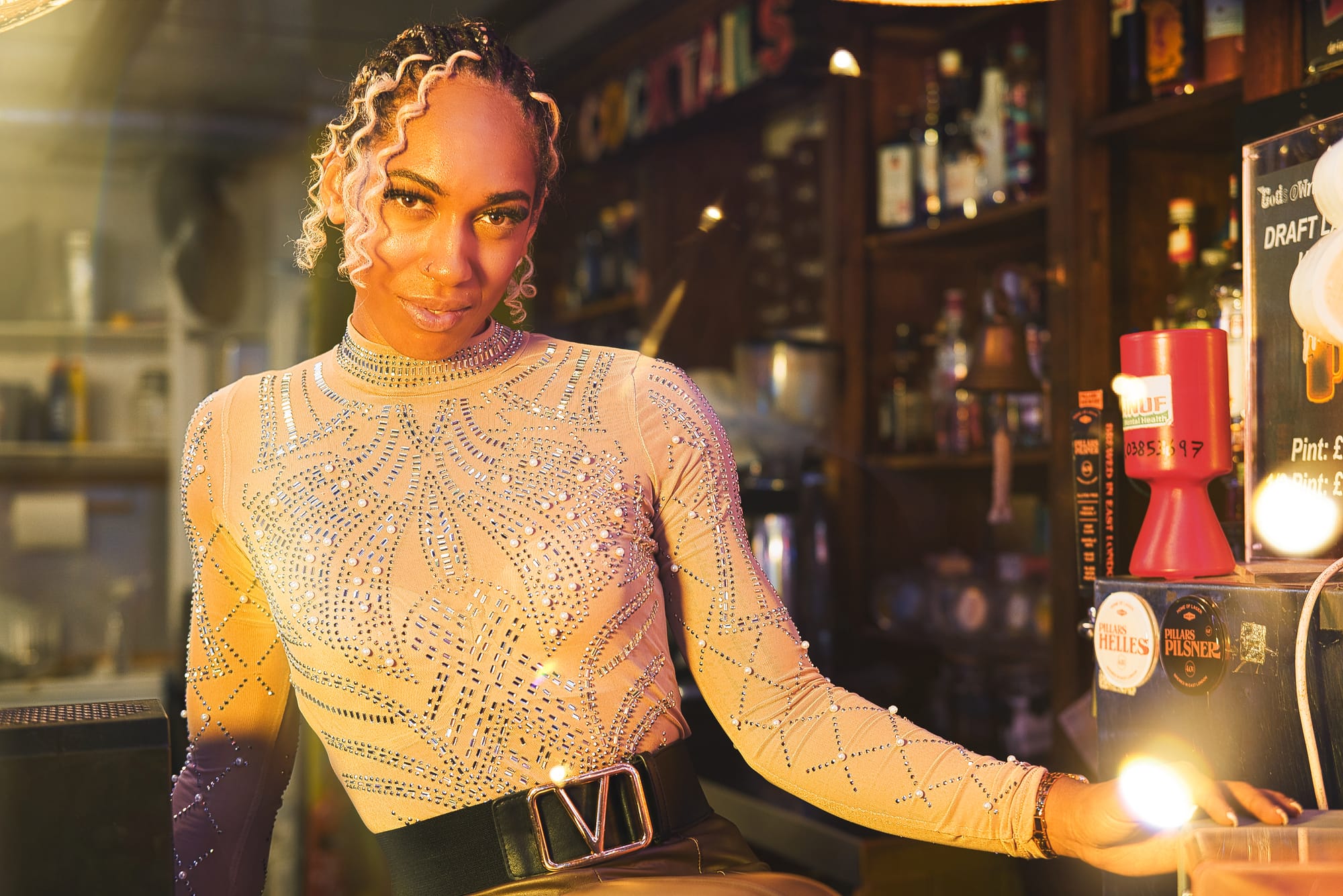
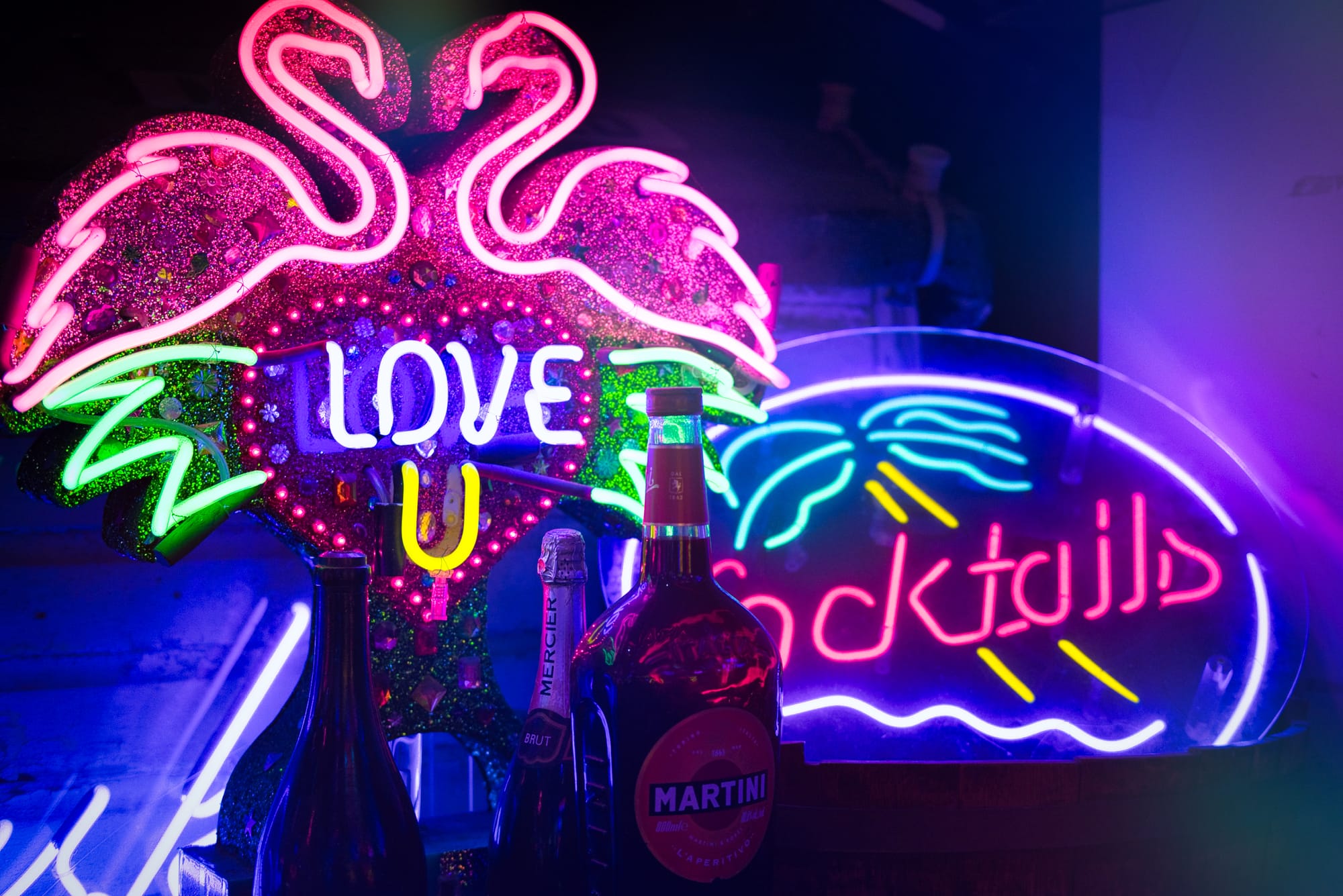
The bar was particularly useful. Bottles, old signs, beer pumps and neon create layer after layer of visual information. Normally I might regard much of that as clutter. Here it provides context.
The wider portrait behind the bar is a good example. The model occupies only part of the frame, and the environment is allowed plenty of space. It is no longer simply a portrait with a colourful background. It becomes a little scene.
The photograph with the book goes further in that direction. There is the suggestion of a story, although we don’t really know what it is. I rather like photographs that leave that unanswered.
Three people, three approaches
One of the pleasures of working with three different models was discovering that the same location didn’t need to produce the same photographs. With the second model, I found myself moving away from the intense pink and blue palette.
The warm portrait at the bar is almost golden. The rhinestones catch the light while the darker background gives the image a completely different mood.
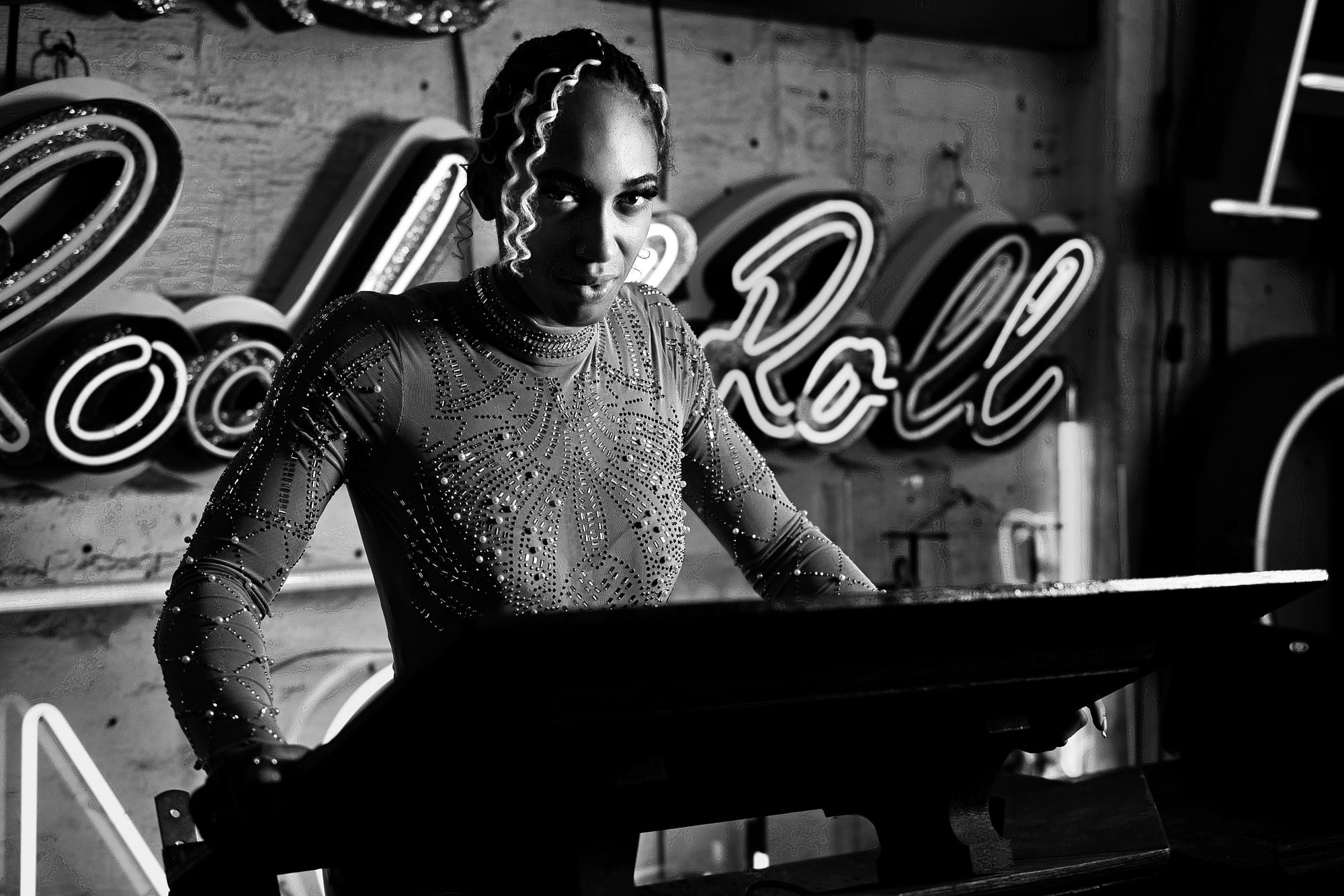
Then I went in the opposite direction and converted another frame to black and white.
Black and White images tell a different story
Converting a photograph made in one of London’s most colourful locations into monochrome might seem slightly perverse. But removing the colour reveals something else.
Suddenly it is about light, expression and shape. The illuminated lettering becomes graphic rather than colourful, and the portrait feels considerably quieter.
I like that contrast, neon without the neon. The same thing happened with the third model.
One portrait uses the coloured light exactly as you would expect, with the face surrounded by glowing bulbs and warm neon. It has something of a late 1970s or early 1980s feel to me, helped by the sunglasses and patterned shirt.
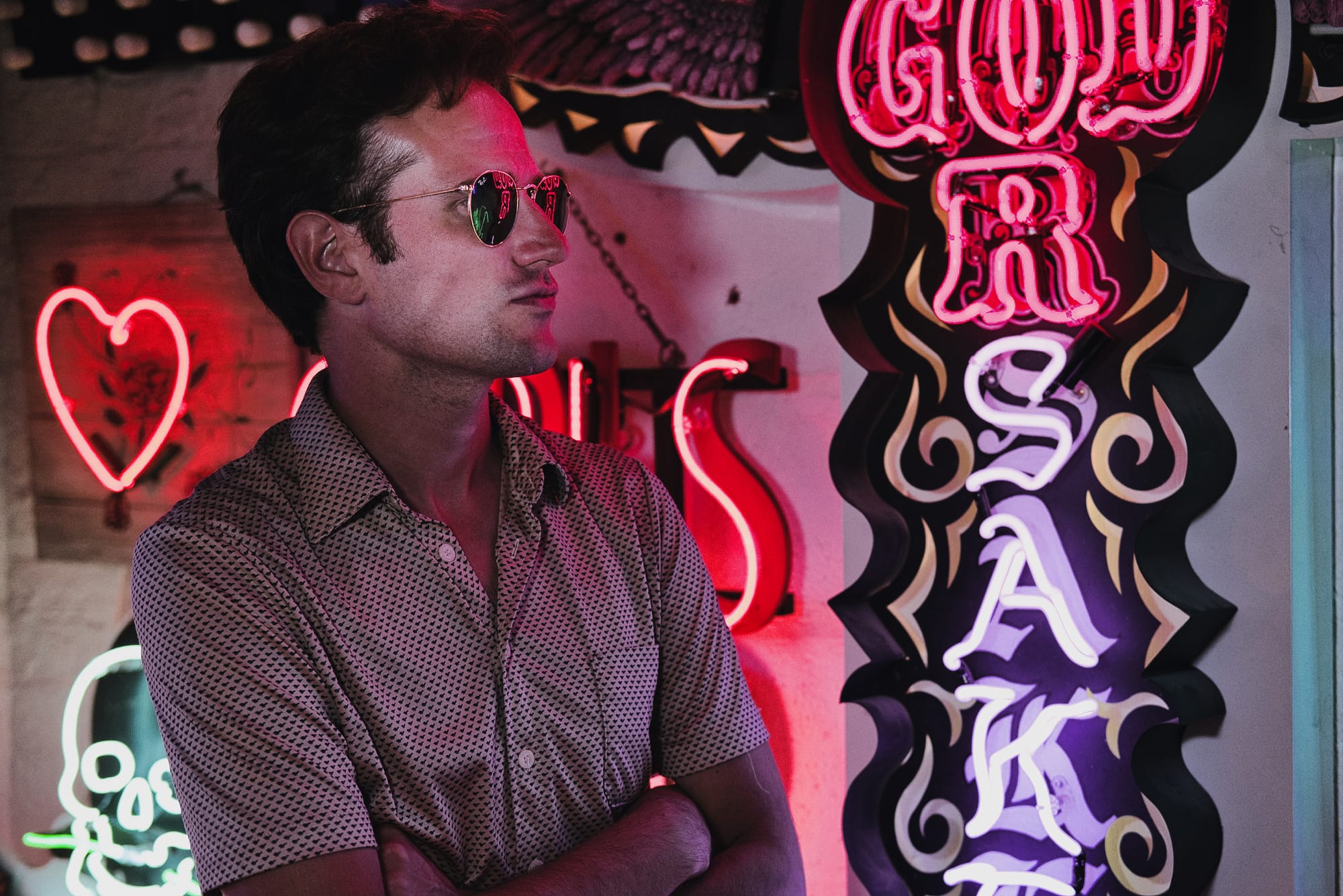
Yet my other choice is black and white.
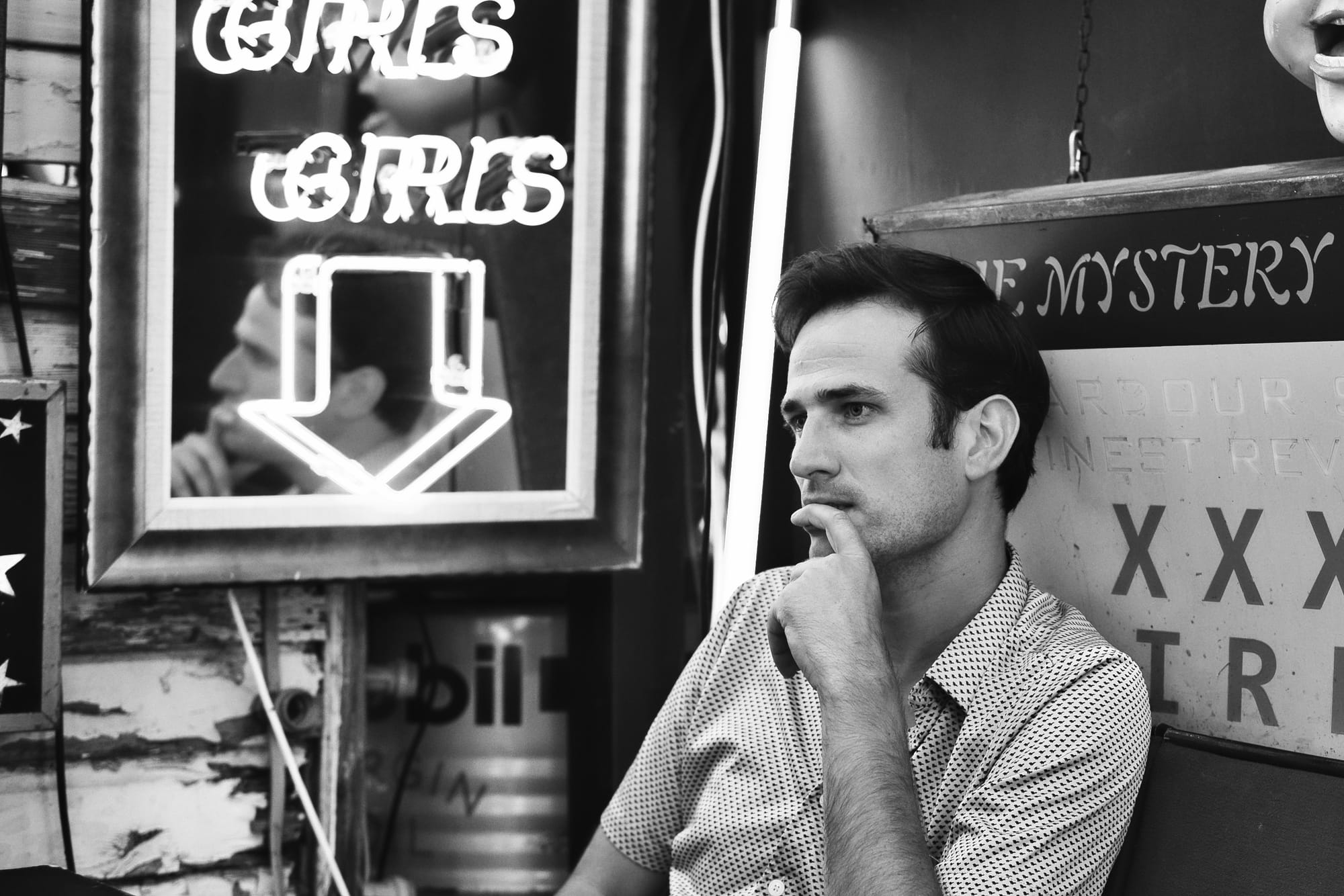
Without colour, the signs become typography and geometry. The repeated lettering and reflected face in the mirror become part of the composition rather than simply part of the spectacle.
It is perhaps the photograph least obviously about neon, and for that reason one of the more interesting ones.
A useful photographic reminder
I came away from the shoot with a reminder of something I occasionally forget. An interesting location doesn’t automatically make an interesting photograph. God’s Own Junkyard provides an extraordinary amount of raw material, but the challenge is deciding what not to include. Sometimes that meant getting very close. Sometimes it meant allowing the chaos into the frame. And occasionally it meant removing the colour altogether. Most importantly, the location had to remain secondary to the people.
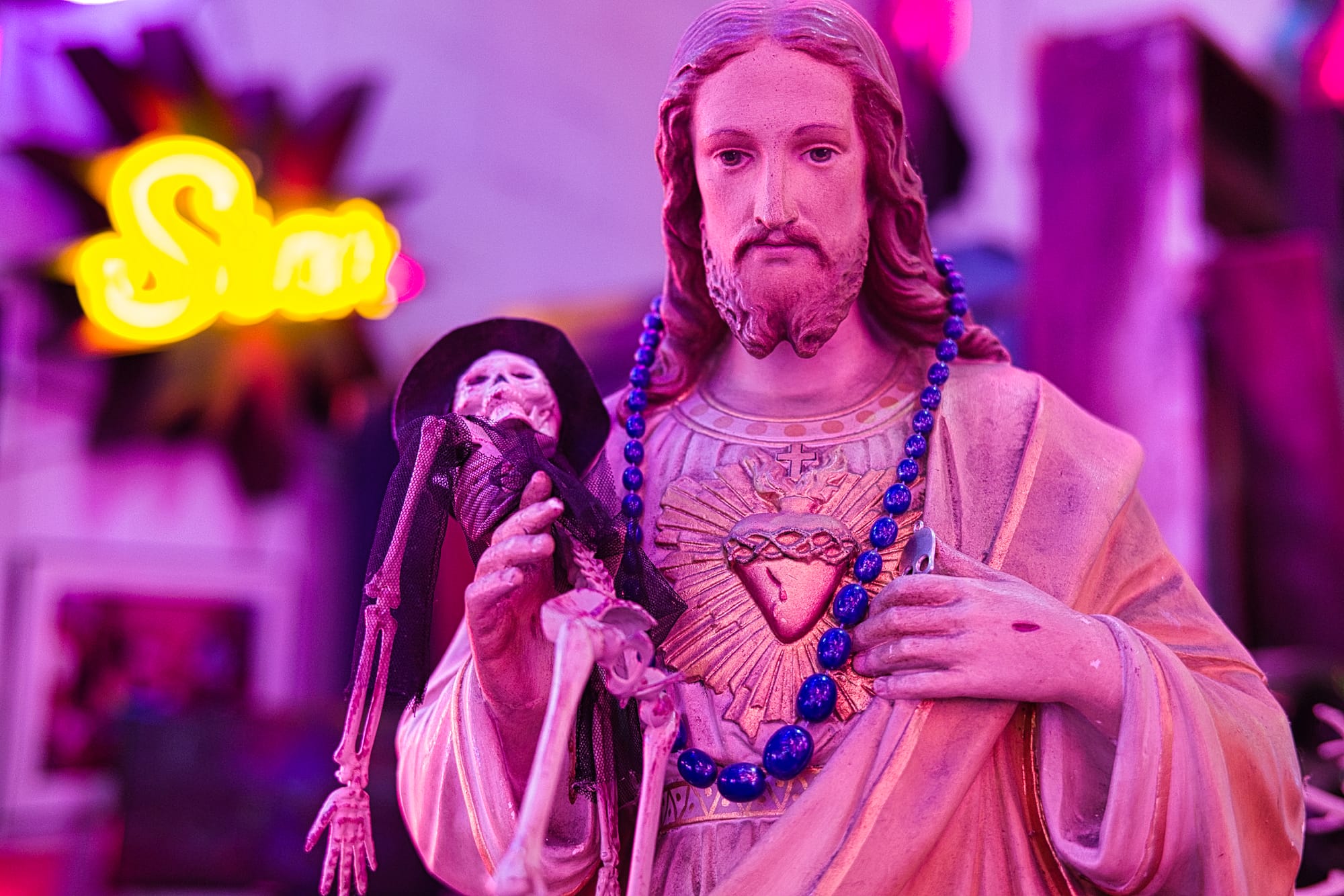
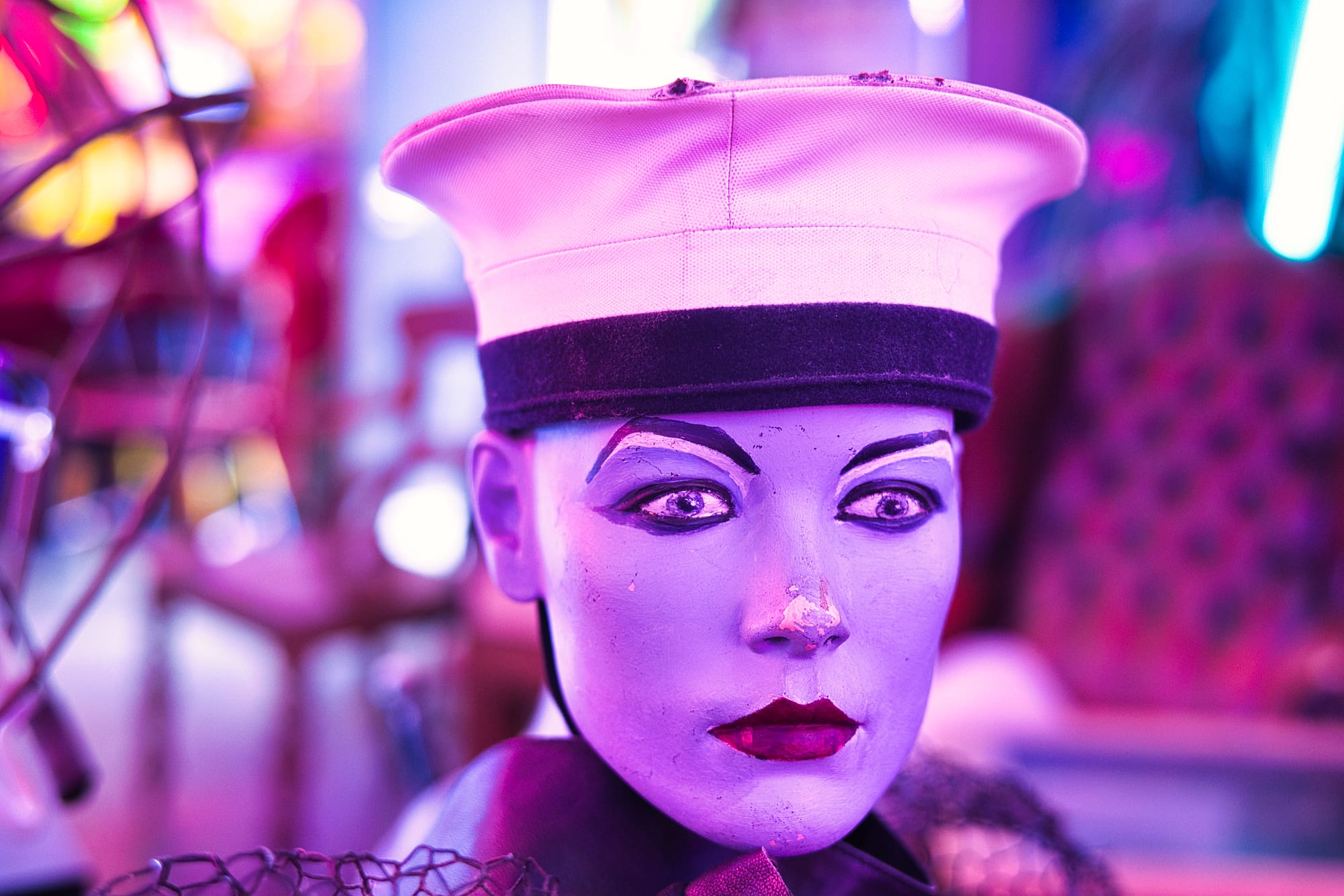
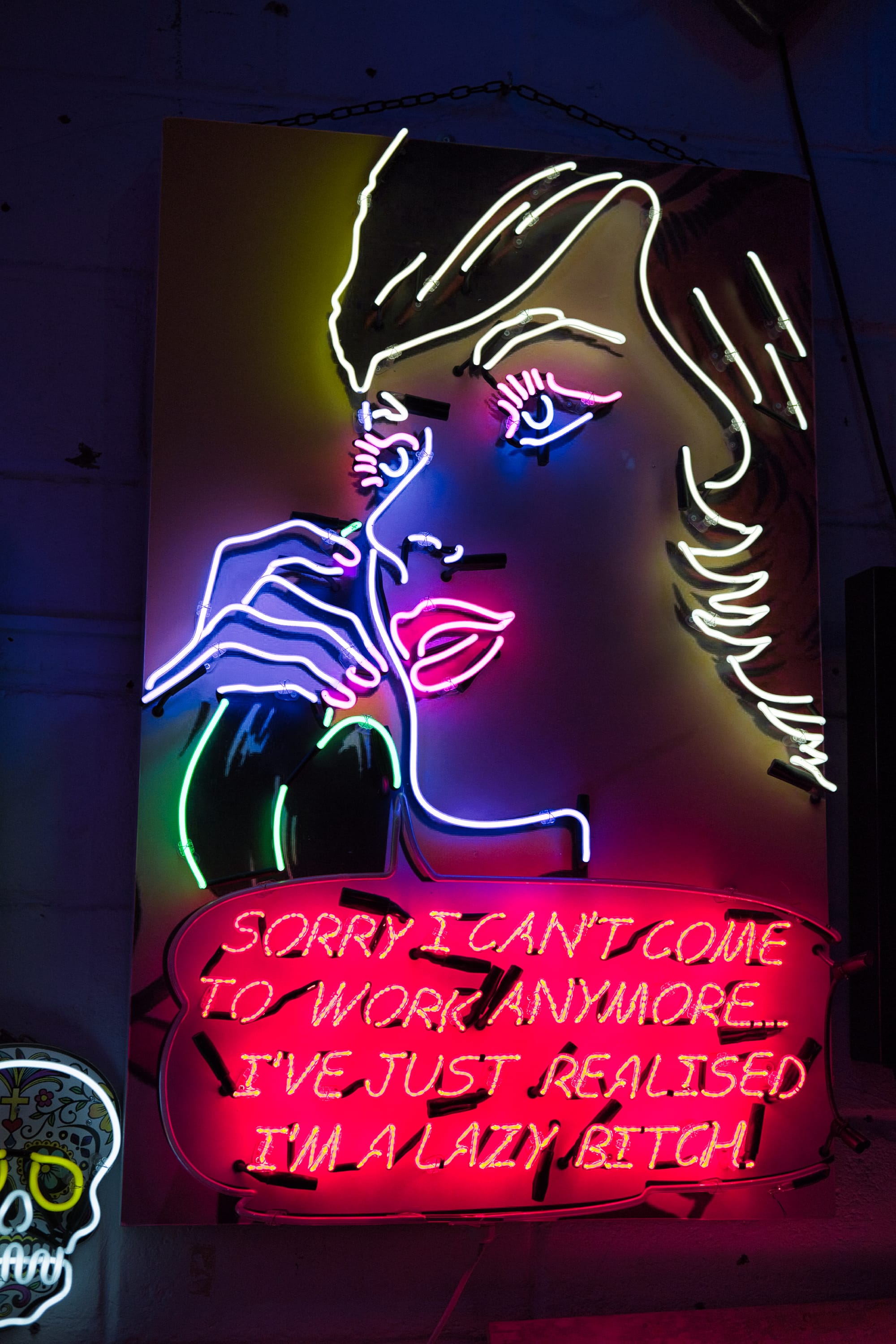
Looking through the finished photographs, I think the ones that work best are those where neither completely wins. The models don’t disappear into the neon, but neither does the neon become an anonymous studio backdrop.
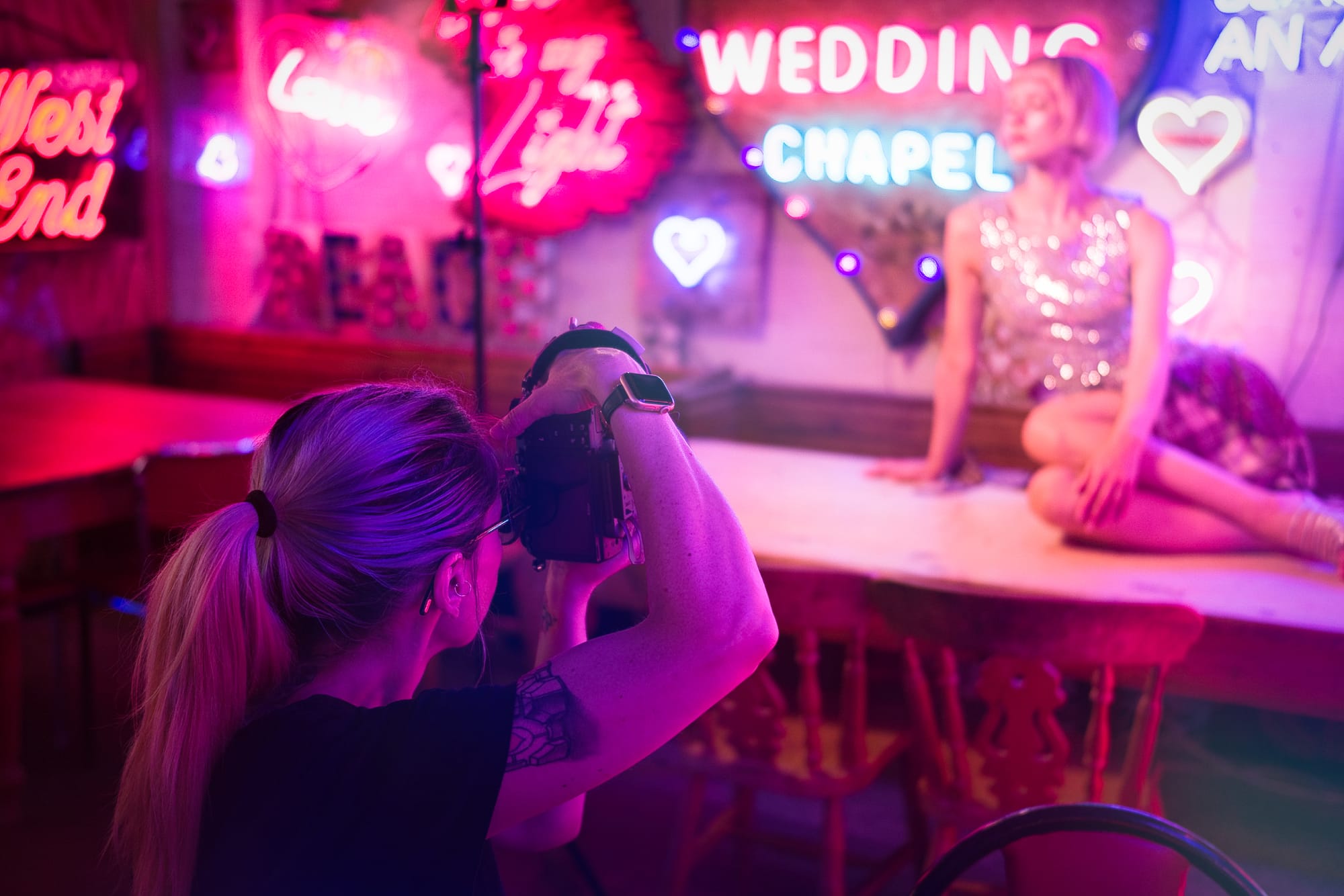
There is a tension between the two, and perhaps that was the real attraction of photographing there. Sometimes having too much to work with is exactly the creative problem you need.
These events are organised by Andrew Mason from 36 Exp Photographers' School, more here: https://www.36exp.co.uk/


