
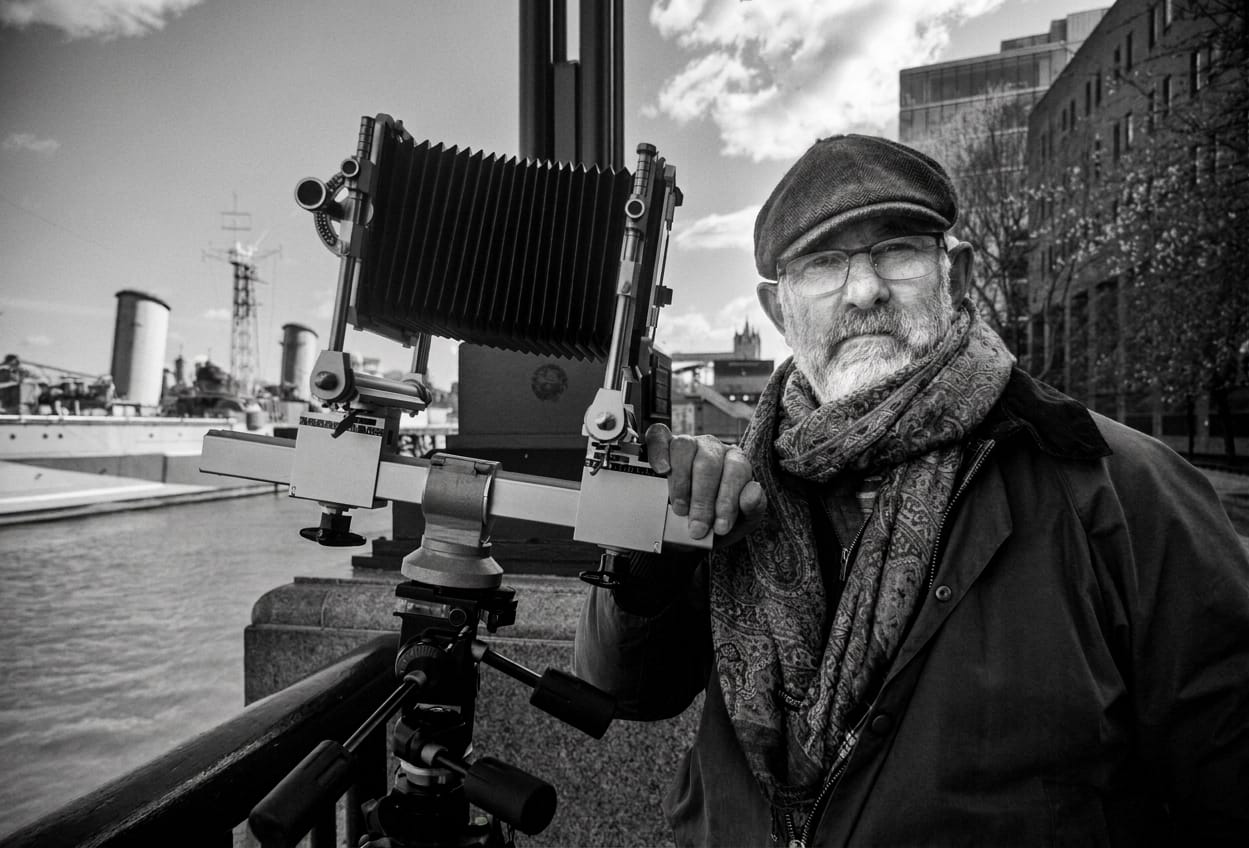
I met him by chance, I was on my own photo walk along the Thames, in fact marking my one year of retirement.
Southbank was doing what Southbank always does. People moving, stopping, taking photos, scrolling, performing a version of London that never really sits still. And then, just off to the side of it all, something didn’t fit that rhythm.
- A large format camera.
- Not decorative. Not nostalgic. Working.
Behind it stood Gile Penfound, setting up a landscape shot of the Thames Northbank tower blocks with the kind of patience that feels almost out of place now. Bellows extended. Tripod locked. Every movement deliberate. You don’t rush a camera like that. And it doesn’t let you rush yourself either.
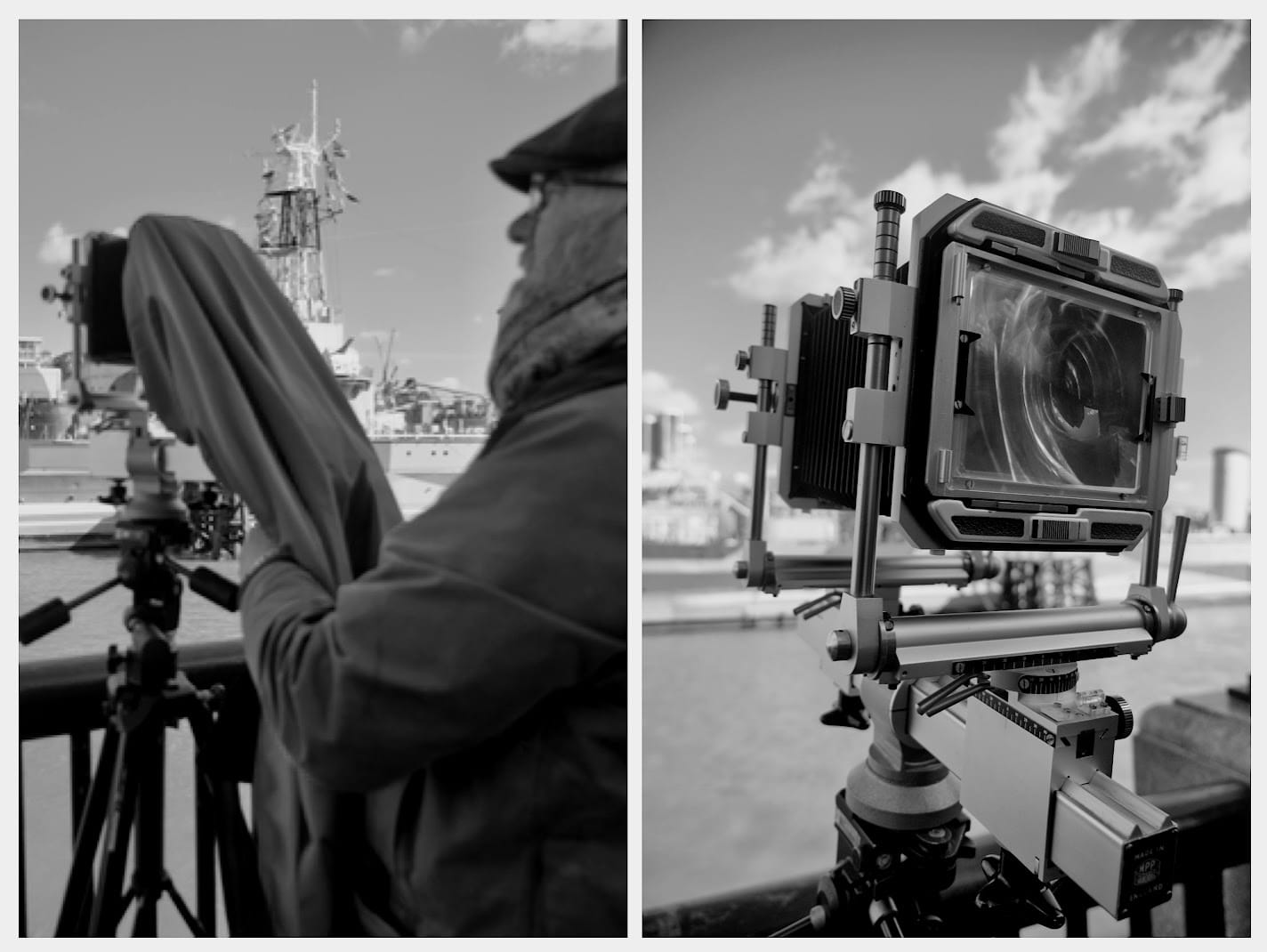
The man behind the camera
Gile worked in documentary and conflict photography before he retired. Not in the obvious sense of chasing headlines, but in something quieter and, arguably, more enduring. His focus sits around people, place, and consequence. The environments shaped by conflict. The human traces that remain. The stories that don’t shout.
Former Chief Press Photographer for the British Army, Giles Penfound recounts his time spent photographing across the world in both military and civilian capacity
That same mindset was present here on the Thames. Even in a familiar London scene, he wasn’t taking a picture of what everyone else sees. He was building a frame that asks you to stop and look again.
A quiet lesson
I took the portrait of him before we parted. Him, the camera, the river behind. It felt important to include the whole setup, because the camera isn’t separate from the photographer. It’s part of how he sees.
That moment stayed with me. Not because it was dramatic. But because it wasn’t. Just a man, a camera, and a refusal to be rushed.


